So What Do We Do Now?
Hey Friend!
Because this cannot just become another cycle of Black grief.
Another moment where we gather online, say “this is terrible,” and then disappear back into survival mode while the ground continues shifting underneath us.
If there is one thing scholars and organizers like Greg Carr and Lurie Daniel Favors consistently emphasize, it is this:
Black people cannot afford disconnection anymore.
Not from history.
Not from politics.
Not from each other.
Not from ourselves.
We Need To Study Ourselves Again
Dr. Carr speaks often about Africana Studies not as some “elective identity course,” but as necessary political education.
Because a people disconnected from their own historical memory become easier to manipulate.
Easier to divide.
Easier to demoralize.
Easier to erase.
And honestly?
That is part of what we are seeing right now.
Too many Black Americans know more about celebrity gossip than Reconstruction.
More about trending discourse than Black political history.
More about entrepreneurship than collective liberation.
And that is not an insult.
That is a symptom.
A symptom of generations of educational neglect and intentional historical distortion.
But if this moment proves anything, it is that Black history is not optional knowledge.
It is survival knowledge.

Because when you understand how Black communities survived previous waves of backlash, voter suppression, economic exclusion, media demonization, and historical erasure, you stop thinking this moment is random.
You begin to recognize patterns.
And once you recognize patterns, you can stop reacting emotionally to every headline and start moving strategically.
That means:
reading Black authors
supporting Black scholarship
studying African and African American history
teaching our children beyond sanitized textbooks
understanding law, policy, voting, economics, and power structures
Not performatively.
Not aesthetically.
Not just during Black History Month.
Consistently.

We Need Stronger Black Political Literacy
Lurie Daniel Favors speaks very directly about something many people still avoid:
Politics affects Black life whether Black people participate or not.
And too many people still approach politics emotionally instead of structurally.
We treat elections like popularity contests instead of power negotiations.
We get distracted by personalities while legislation quietly reshapes our lives underneath us.
Meanwhile:
districts are redrawn
judges are appointed
school curriculum changes
labor protections shift
public funding disappears
rights are weakened incrementally
And many people do not notice until the consequences become personal.
We cannot afford that anymore.
Black political engagement cannot only happen every four years during presidential elections.
It has to happen locally.
At school boards.
At city councils.
At judicial races.
At policy meetings.
At community organizing events.
Because power is often decided long before presidential ballots are cast
We Need To Rebuild Community Again
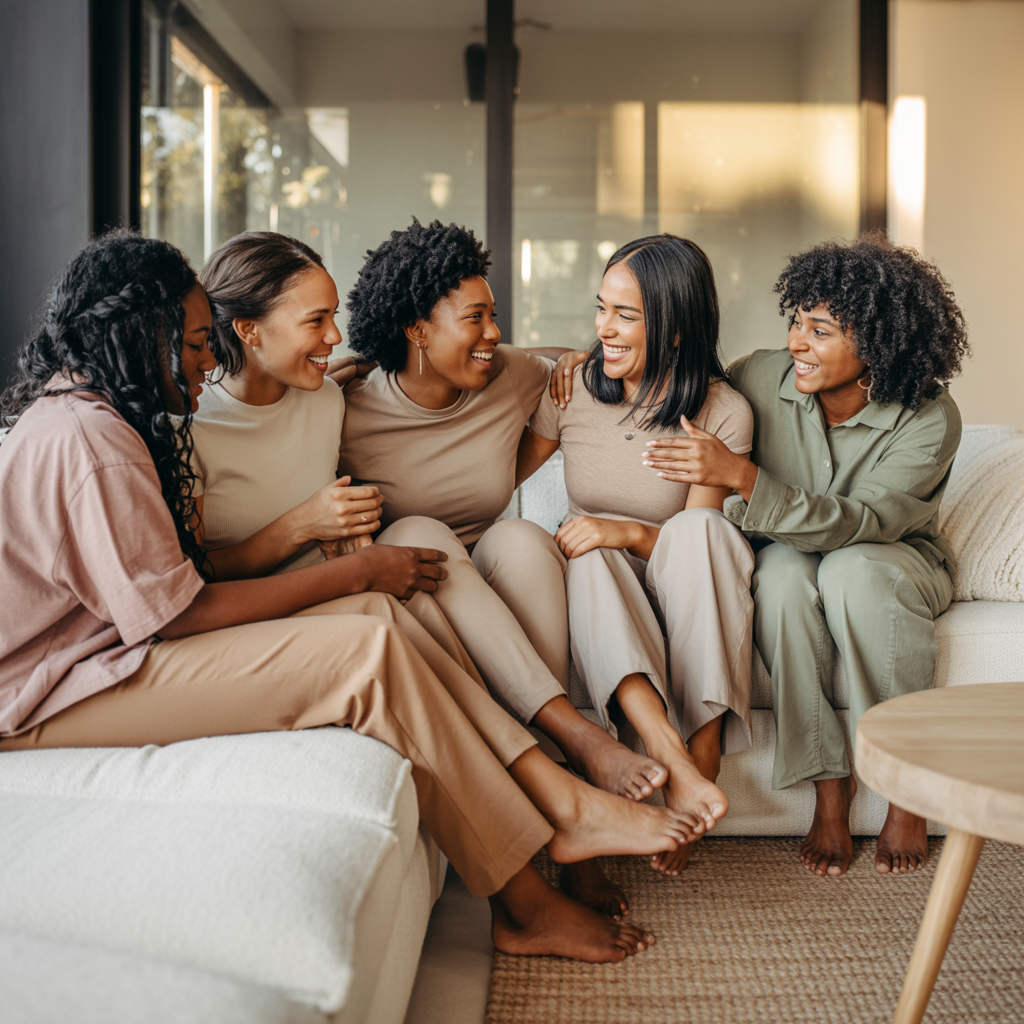
Another thing both Carr and Favors consistently point toward is collective responsibility.
Not individual escape.
And that part may be uncomfortable for a culture that constantly pushes hyper-independence and personal branding.
But no oppressed group survives purely through individual success stories.
Community matters.
Relationships matter.
Local support matters.
Black institutions matter.
Black media matters.
Black schools, Black bookstores, Black organizers, Black teachers, Black archives, Black cultural spaces — all of it matters.
Because when larger systems become hostile, community becomes infrastructure.
And maybe that is the real reconstruction work in this moment.
Not just “making it.”
Not just surviving individually.
Not just becoming successful enough to look away.
But rebuilding Black consciousness.
Rebuilding political awareness.
Rebuilding historical literacy.
Rebuilding connection to each other.
Because if they are actively trying to erase us, then remembering ourselves becomes an act of resistance all by itself.
And maybe that is the question now.
Not:
“What do we have to lose?”
But:
What are we willing to rebuild?
x, Aja
DISCLOSURE: Some of the links on this site are affiliate links, which means I may earn a commission if you click through and make a purchase, at no additional cost to you. I only recommend products and services that I use, love, or believe will provide value to my readers. Your support helps keep the content on this site free, and I sincerely appreciate it.
Hi, I’m Aja.
I created this space to collect and share the media, ideas, histories, and conversations helping me rethink the world and my place within it as a Black American woman.
I’m interested in the ongoing process of relearning:
history, identity, culture, politics, memory, community, and ways of living that feel more human, intentional, and honest.
This is part archive, part exploration, part reconstruction.