3 Things Every New Blogger Needs to Know in 2026
Hey, CEO Friend!
What You’ll Learn in This Post
The real difference between “blogging for affiliate marketing” and “blogging for authority” (and why beginners get this wrong).
How to choose the right platform without getting bullied into WordPress.
The AI-first writing structure that helps your posts get picked up in search and by chatbots (hello, GEO).
Why beginner bloggers are getting terrible advice in 2026
Because most of the blogging advice floating around the internet was written for people doing affiliate marketing, not for the women building real businesses, real authority, and real connection.
Here’s what’s true for me:
Most of the “beginner blogging tips” people get shoved down their throats were never meant for coaches, consultants, virtual assistants, photographers, or anyone using blogging as a business-building tool. They were written for people trying to rank on Google—not for people trying to build trust, authority, and a client pipeline.
That’s why so many beginners feel overwhelmed, burnt out, and confused before they’ve even published their first post. They’re following rules that don’t apply to the game they’re playing.
So today, I’m giving you the three things beginner bloggers actually need to know if you’re writing to build authority, not chasing affiliate pennies.
Let’s get into it.
1. Should beginners really start on WordPress?
No—not if your goal is authority, clients, and clarity. Start on Squarespace. It’s simpler, and keeps you out of decision fatigue
Why WordPress isn’t the automatic “best choice”
WordPress is fantastic…
if you’re building a library of product reviews
if you’re chasing affiliate links
if you want to spend your evenings googling “why is my theme doing this?!?!”
But for a coach? A consultant? A service provider?
WordPress can feel like adopting a baby dragon when all you needed was a goldfish.
Here’s the thing people won’t say out loud:
Squarespace gets a bad rep because it’s not built for hardcore affiliate bloggers.
That’s it.
That’s the whole scandal.
But you?
You’re building authority.
You’re building a body of work.
You’re building a space where people clearly see, “Oh… she knows what she’s talking about.”
That’s a different sport.
Why Squarespace is actually perfect for beginners building authority
It keeps you focused on writing, not tinkering.
It’s beginner-friendly, so your blog doesn’t turn into a tech project.
Your posts look clean, modern, readable, and professionally branded instantly.
You can absolutely do affiliate marketing if you choose to later (people are out here making money on Squarespace every day).
Most importantly:
Squarespace lets you start quickly and build momentum instead of wasting six weeks wrestling with plugins.
And momentum matters more than anything in your first year.
2. Should beginners worry about SEO in 2026?
Not unless you’re focused on affiliate marketing.
If your goal is authority, focus on AI-first search (GEO) instead.
Why traditional SEO is optional for beginners (and sometimes harmful)
SEO is powerful, but it’s not neutral.
It was built for a type of blogger that… let’s be honest… a lot of beginners are not.
Traditional SEO assumes:
You’re writing dozens of keyword-driven articles
You care about ranking
You’re doing product reviews
You want high-volume traffic
You don’t mind writing about topics because “the keyword is good,” not because you actually care
But if you’re a service provider? (a coach, consultant, web designer, virtual assistant, etc.)
You don’t need high-volume traffic.
You need targeted authority.
And here’s where the landscape has changed:
More and more people are turning to AI to get answers—not Google.
When someone types a question into ChatGPT or Perplexity, the AI doesn’t give them 25 links.
It gives them answers sourced from the clearest, best-structured content it can find.
Meaning:
If you’re writing for authority, your job is to make your post AI-extractable.
This is what we call GEO (Generative Engine Optimization).
That means:
Using question-based headers
Answering the question directly
Then expanding with examples, frameworks, or stories
Making your post scannable
Using bullet points (AI loves them)
Keeping your ideas crisp, clean, and structured
You’re writing for humans, but you’re also writing for the AI assistant they’re using to research their problems.
Your future clients are literally typing their questions into AI right now.
Your blog needs to be the answer that gets surfaced.
3. Do beginners need a niche before they start blogging?
Absolutely not. You need to start writing to find your clarity—not think yourself into it.
If I’m honest, beginners exhaust themselves trying to figure out a niche before they’ve written anything. They’re out here spiraling about “messaging” while their blog sits empty, untouched, and unloved.
Here’s what’s true for me:
Blogging is forgiving. Flexible. Evolving.
You grow as you write.
You discover what you actually care about as you write.
You refine your voice as you write.
The clarity comes from the action—not the brainstorming session.
What to write about in the beginning:
Your experiences
The tools you use
How you help people
The transformations you’ve had
Your client stories
What you’re learning
What you’re practicing
What you wish someone had told you
As you build this body of work, your patterns start to reveal themselves.
That’s when you discover your niche — through practice, not pressure.
Why this matters:
Your future clients don’t need you to have a niche statement printed on a mug.
They need to see you thinking, teaching, explaining, helping, and evolving.
That’s what builds trust.
That’s what builds authority.
That’s what builds a business.
So what does this mean for beginners in 2026?
If you’re starting your blogging journey and you’re building a business—not an Amazon store—then here’s your roadmap:
Begin on a platform that supports clarity, not chaos.
(Squarespace > WordPress for beginners building authority.)
Write using AI-first structures.
(GEO > SEO when authority is your goal.)
Don’t get stuck on finding a niche.
(You find your direction by writing, not by overthinking.)
Blogging is still one of the most powerful tools for building authority, trust, and visibility — but only if you’re playing the right game.
If your brain is screaming, “WHY HAS NO ONE TOLD ME THIS BEFORE?!?”… welcome. 🙃
This entire approach to blogging—the simplicity, the clarity, the authority-first focus, the GEO structure, the no-niche-overthinking energy—is exactly what I teach inside Blog Hackers. If you want to stop guessing and start blogging like a grown woman with a business, come join us. You’ll never look at blogging the same way again.
FAQ: Beginner Blogging in 2026
Do I need a niche before I start blogging?
No. Write first, niche later.
Can I use Squarespace if I want to add affiliate marketing later?
Yes — plenty of people do.
How much should beginners write each week?
One high-quality post written with GEO structure is better than 30 rushed posts.
Do I need to know SEO?
Not if your focus is authority-based blogging.
Is blogging still worth it in 2026?
More than ever — especially because AI rewards structured, high-authority content.
Mapping Success With You..





Manifestos You’ll Love!
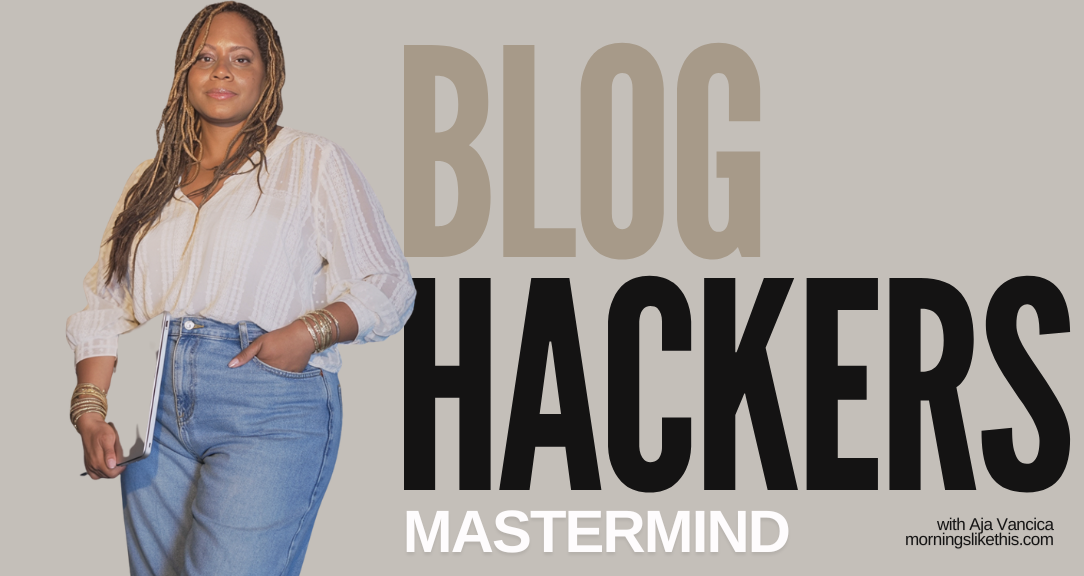
3-month Mastermind to learn how to effortlessly create blog posts that make readers feel like they just left the best masterclass ever, and showcase you as an authority in your industry. Doors Open In Dec! You Ready? Learn More >

DISCLOSURE: Some of the links on this site are affiliate links, which means I may earn a commission if you click through and make a purchase, at no additional cost to you. I only recommend products and services that I use, love, or believe will provide value to my readers. Your support helps keep the content on this site free, and I sincerely appreciate it.